
Jefferson County Busted Mugshots
A booking record starts the moment someone arrives at the Jefferson County Justice Center. The sheriff's office opens a custody file. It can hold identifying details, booked charges, bond terms, and any release or transfer action. A booking photograph is simply part of that file when one exists and can be released.
Several agencies work here. Mount Vernon Police Department, the sheriff's office, and others all make arrests in the county. The arresting agency keeps the incident report. The sheriff keeps the detention record. So a city report, a jail record, a court docket, and a news story may each show a different slice of the same event. Use plain wording like "arrested," "booked," or "charged," and always name the source and date.
A booking entry only shows what happened at intake. For the rest of the story, check the Jefferson County court record.
A 2024 Illinois Department of Corrections inspection offers a dated snapshot of the jail. It is not a live head count. The Justice Center sits at 911 Casey Avenue in Mount Vernon. It opened in 2004 and holds 252 beds. None are set aside for juveniles. That detail grants no publishing rights over juvenile records, which stay governed by Illinois confidentiality rules.
Busted Booking Fields in Jefferson County
Illinois law sets a floor for public arrest information. It does not promise every field will appear in a browser roster or the sheriff's app. The current JCSO inmate page confirms an app-based inmate list but never publishes its full layout. Keep public arrest information separate from protected medical, classification, disciplinary, investigative, or victim data when filing.
Some fields help you pin down the right event. The word "may" carries weight. These fields appear in law, historical reports, court material, and wanted posts, but the app may not display every one of them.
| Field | What it can show |
|---|---|
| Full name | The name used in the booking, court, news, or agency record. |
| Booking date and time | When the Justice Center intake was recorded, if maintained and released. |
| Arresting agency | JCSO, Mount Vernon Police Department, or another agency identified in the report. |
| City or location | The arrest location or city field, which may not be the person’s residence. |
| Charges as booked | The charge recorded at intake. |
| Bond | A bond amount or status when the custody or court record includes it. |
| Photo | A booking image only when one was created and the custodian can release it. |
| Custody action | Receipt, discharge, release, or transfer information when available. |
| Case number and disposition | The court trail, which belongs with the Circuit Clerk or Judici rather than the jail app. |
Internal jail files run deeper than what the public sees. Health checks, fingerprints, DNA samples, property inventories, unit assignments, and confidential contacts should not be expected from a public search. Ask narrowly for public arrest-information fields instead of demanding every intake document. A tight request works better.
Busted Records and Photos by Request
The sheriff's FOIA information page points requesters to the Jefferson County Sheriff's Office public records portal. Questions can go to the Records Officer at 618-244-8004 extension 333. In the request, identify the person, the approximate booking date, the arresting agency, the record type, and your preferred electronic format. The public site posts no county-specific booking-photo price and no guaranteed production date.
List your items separately. Ask for the booking or public arrest-information record, for a booking photograph if one exists, and for receipt, release, or transfer details. Need a police incident report too? Name the arresting agency, since that report may sit with Mount Vernon Police Department or another custodian. Court dockets are a separate request and belong with the Circuit Clerk.
- Open the JCSO portal and describe the full name, date range, agency, and record sought.
- Request electronic delivery and list the public fields, including booking date, charges as booked, bond status if maintained, and custody action.
- Ask for the statutory basis of each redaction and for a fee estimate before any unusual production charge.
- Keep the request, confirmation, response, and production link. If no photo is supplied, ask whether none was created, another agency holds it, it is exempt, or it was disposed of under an approved schedule.
Jefferson County Sheriff’s Office
911 E. Casey Ave.
Mount Vernon, IL 62864
618-244-8004
Records questions: extension 333. Use the FOIA portal for the written request.
Jefferson County Justice Center
911 Casey Ave.
Mount Vernon, IL 62864
618-244-8015
The inspection lists this facility phone. A records counter schedule is not published.
Under 5 ILCS 140/3, a public body generally gets five business days to respond to a written FOIA request, with limited extensions for listed reasons. Treat that as a response deadline only. A complex search or image production may not wrap up inside five days. Fee rules in 5 ILCS 140/6 favor electronic delivery. They also cover page charges, color copies, oversized copies, and commercial requests.
Illinois Mugshot and Arrest Rules
5 ILCS 140/2.15 governs what criminal-justice agencies must share after an arrest. The clock runs 72 hours at most. The required items include identity details, a photograph when one exists, the charges, time and location, the arresting agency, and custody receipt, discharge, or transfer information. Exemptions still apply. Juvenile records stay confidential. Nothing here forces JCSO to keep a browser roster, publish app photos, or leave an image online for a set stretch of time.
Section 2.15(e) narrows things further. It limits some law-enforcement mugshot publication on social-network sites, with exceptions tied to public safety and the nature of the matter. That's not a blanket ban. It's also no order for every county to run a photo gallery. So read JCSO's social posts as agency communications, one by one, not as a full booking feed.
Watch your wording on photos. The JCSO web page says the official app lists inmates, but it never says whether booking photographs appear there. Say availability varies, and request the record when you need it. Never promise a photo for every booking.
Correction, sealing, and expungement
Illinois targets outfits that charge fees to scrub criminal-record information. The statute is 815 ILCS 505/2QQQ, and it carves out some exceptions. Got a wrong detail listed? The law allows a correction after certified notice plus supporting paperwork. Save the exact URL. Then contact the agency or publisher that posted it, and attach the official order if you have one. Anyone demanding payment to delete a record should be a red flag, not a shortcut.
Courts offer a different route. Under 20 ILCS 2630/5.2, expungement and sealing hinge on the case outcome, the offense type, supervision, and other statutory conditions. The Illinois Courts expungement and sealing forms walk through the paperwork. A judge's signature is only step one. Send copies to JCSO, the arresting agency, the Circuit Clerk, and any site that republished the record. Search engines catch up eventually, but they can't hide a page that still lives at its source.
A few unofficial Jefferson County indexes push their own fix-it processes. The Busted Newspaper removal form, the RecentlyBooked removal policy, and the Mugshots.com record-maintenance page belong to those publishers. They are not county law. Send only paperwork tied to the exact record. And remember: a fix on a copycat site changes nothing in the official court or sheriff file.
How to Find Jefferson County Busted Mugshots
Where do you start? It depends on custody status. Someone booked recently or still held is a county matter, and the sheriff's app is the place to look. A person who was released may have dropped off the app even though the booking record still exists and can be requested. A sentenced state prisoner falls under IDOC. Federal and immigration detainees sit with entirely different custodians.
Follow this order, because an empty search result is not proof that an arrest never happened:
- Start at the official JCSO inmate-search page and follow its app instruction for current county custody.
- If no entry appears, consider release, transfer, a warrant or court question, and the possibility that the app does not expose the needed field.
- Request an older booking sheet, public arrest-information record, release detail, or available photograph through the JCSO FOIA portal.
- Use the Jefferson County court route for the case number, first appearance, later hearings, and disposition.
- Use IDOC, VINE, BOP, or ICE only when the person’s custody state fits that system.
Jefferson County does not post a filterable browser roster. That's a real limitation. It makes the official app and a well-aimed FOIA request far more dependable than a name lifted from some unofficial list. Whenever a result comes back, write the date next to it.
Where Busted Booking Photos May Appear
Start with official channels. A booking photo might sit inside a county record, an agency press release, or a state custody profile. Each has its own interface and its own photo policy. The table below separates each source from what it can actually prove.
| Channel | Photo or record role | Authority and limit |
|---|---|---|
| JCSO inmate page and app | Current county custody list; photo display is not stated. | Official current-custody starting point, not a browser gallery or disposition. |
| JCSO FOIA portal | Older booking record, public arrest information, and photo if available. | Official request route; ask about redactions, fees, and retention. |
| Illinois Courts and Judici | Case filings, hearings, and disposition. | Official court route, not a live jail roster or photo source. |
| IDOC offender search | State-custody profile may include current and previous photos. | Covers current IDOC custody or parole, not every county arrest. |
| Local news | Occasional narrative or agency-supplied image. | Secondary coverage, not a complete booking list. |
| Unofficial county indexes | May copy photos, charges, and city fields. | Use only as a lead; entries can be stale, incomplete, or wrong. |
Three sites dominate the unofficial landscape: Busted Newspaper's Jefferson County section, RecentlyBooked's Jefferson page, and the Mugshots.com Jefferson County index. None of their photos or tallies come from JCSO. Arrests.org has no verified Jefferson section. No Mugshots.zone page for Jefferson County, Illinois checks out either. Be careful, too, not to grab another Illinois county's listings and call them Jefferson.
The screenshot here shows the official JCSO request path, not a page full of faces.
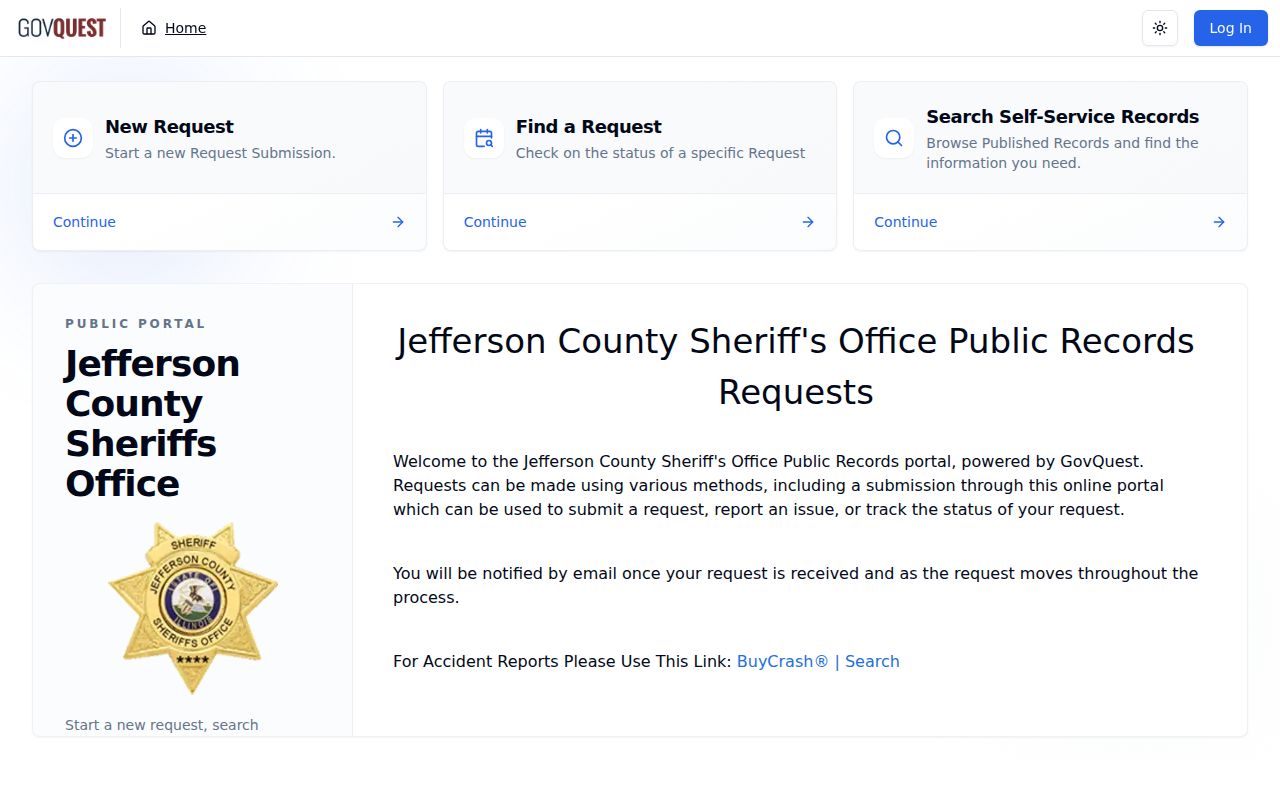
A portal request can lock in a booking record before it drops off a current-custody list. What it can't do is reach into another custodian's files for court results. Those live elsewhere.
Busted Booking Access in the JCSO App
Jefferson County has an unusual access quirk. The whole system is app-first. The official JCSO inmate page sends visitors to the sheriff's mobile app for the inmate list. The page itself has no search form. There is no field list, no update timestamp, no date filter. It says nothing about photos or how long entries stay up. The Apple and Google store listings tout public-safety alerts and tip features, but neither explains how the custody module works.
Treat the field checklist below as a request aid, not a description of the app. A missing result could mean many things. Release, transfer, a data lag, a field limitation, or a record kept from public view are all possible.
| Question | What Jefferson County confirms |
|---|---|
| Current custody | The official app is the sheriff’s stated inmate-list route. |
| Search fields | The browser page publishes none. Request name, booking date, agency, charge, and custody action if needed. |
| Photographs | No JCSO web statement confirms that the app displays booking photos. |
| Refresh cadence | No same-day, multi-day, or “last updated” interval is stated. |
| Persistence | No rule says how long a released person remains visible. |
Open the official app for a lawful check. Note the date you looked. Record only the fields you need to explain your access. Never scrape a whole list or turn it into a photo collection.
- Open the JCSO inmate page and use the official app link supplied there.
- Search the name or visible identifier if the app offers a search; otherwise review the current list without copying faces.
- Read any status, booking date, charge, bond, or release label as a custody snapshot, not a court result.
- If the person is absent or an image is not shown, use the FOIA portal and ask the Records Officer what record is maintained.
The sheriff's app and social feeds are tools and clues at once. A single post, even with an agency photo attached, tells you nothing about the total number of Jefferson County bookings. That count stays unknown.
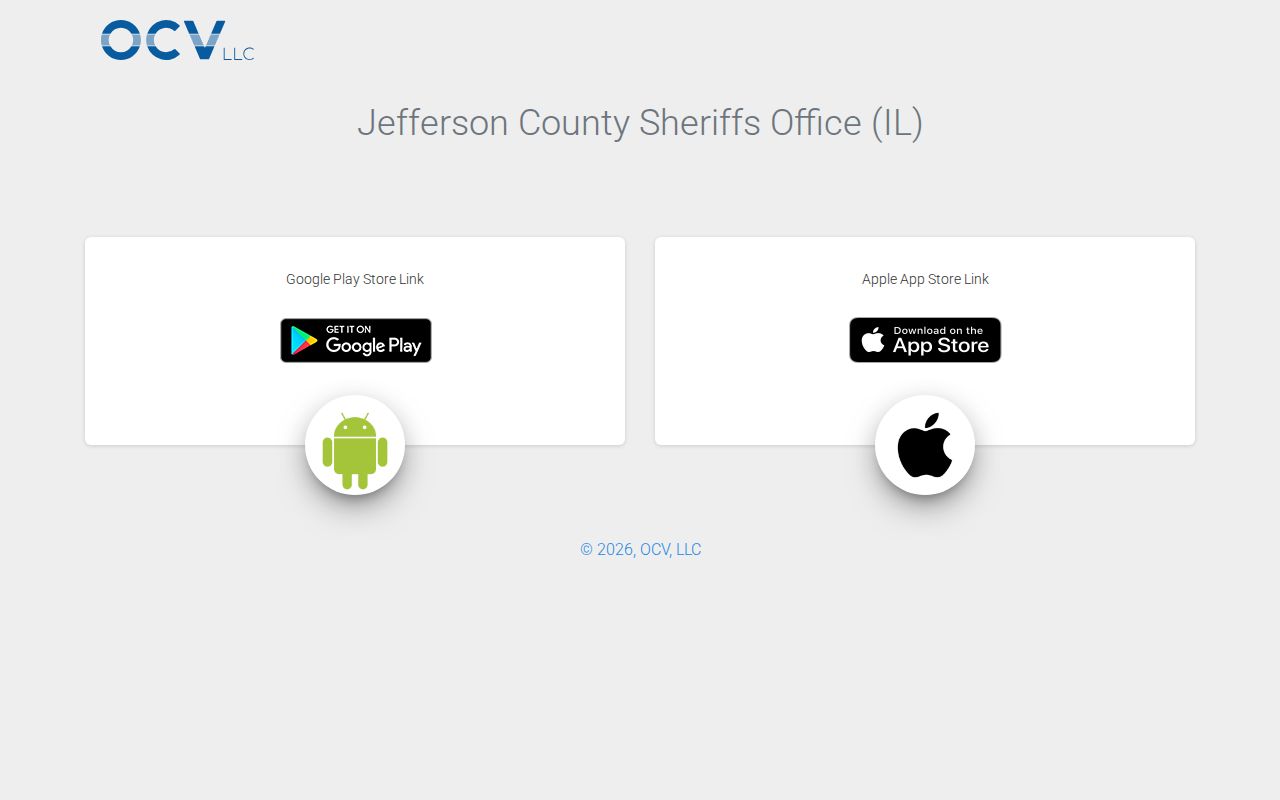
That gap is exactly why a Jefferson County lookup should keep three things apart: current custody, old booking records, and court outcomes. Each answers a different question, and mixing them invites error.
Jefferson Bookings in the News and Blotter
The sheriff's browser site offers no same-day booking feed. The app may show current inmates, but JCSO never says whether it refreshes continuously, a few times daily, or by hand. A historical X95 format shows the Justice Center once supplied daily reports in 2022. That proves an old newspaper format existed. It does not prove a live arrest log today.
Those old X95 reports listed name, age, city, arresting agency, and charges. Those fields are gold for tracing a story, especially when the city field says Mount Vernon, Ina, or Bluford. Still, they remain secondary reports. Confirm current custody with JCSO and case outcomes with the court.
Window warning. Jefferson County publishes no official same-day or multi-day window on its inmate page, and any third-party 30-day view reflects that publisher alone, not county retention rules or a full booking count.
For the history of the local feed, the X95 Justice Center report is worth a look. A local-news archive can pin down a date or a spelling. It cannot prove anyone is in custody right now. Routine bookings, corrections, releases, and protected matters also go missing from news coverage, so treat it as one thread, not the whole cloth.
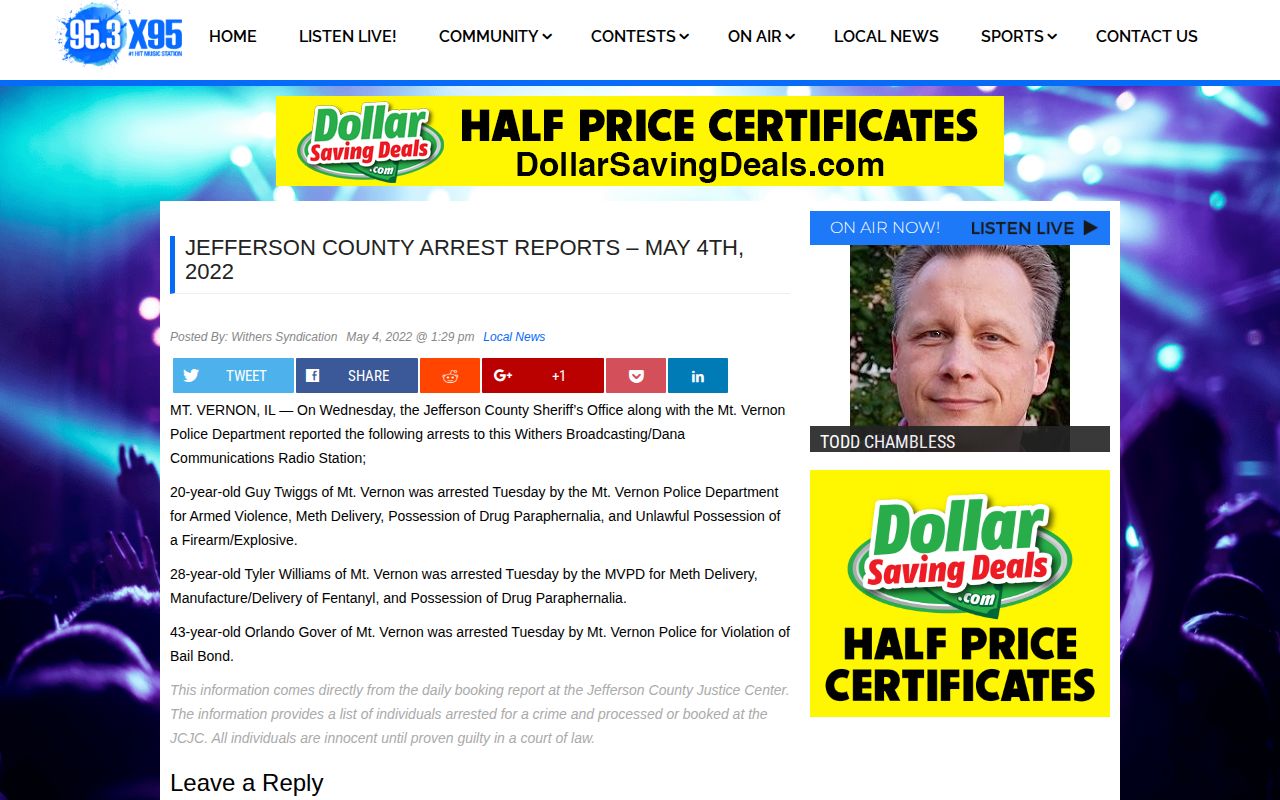
Say a news story and the jail app give you two different dates for the same person. Don't pick one and toss the other. Keep both. Then ask what each source is actually tracking: the app shows who the county holds right now, while the article may be describing an older booking that made the blotter.
Busted, Released, and Sent to IDOC
A missing jail entry is not a missing arrest. Release, transfer, or a change in public display can remove a person from a current-custody list while the booking record remains with JCSO. A state sentence moves the main custody question to IDOC. Keeping those states apart prevents the most common search error.
| Custody state | Best route | What it answers |
|---|---|---|
| Just booked or in Jefferson County custody | JCSO inmate page and official app | Whether the person appears in the current county list, if the app exposes the entry. |
| Released or transferred | JCSO FOIA request | Whether a public booking, custody action, or available photo remains in county records. |
| State prison or parole | Illinois DOC offender search | Current IDOC custody or parole; completed sentences may not appear in the current search. |
| Court case and outcome | Jefferson County Circuit Clerk or Judici | Case number, hearings, pleas, orders, and disposition. |
| Notification need | Illinois VINE | Custody or court-status alerts where the connected record supports them, not a photo. |
The IDOC search is not a county booking channel. IDOC material can include a state-custody profile and photos, but an IDOC image should not be described as the earlier Jefferson County intake photo. The state system also has an archived-record route for completed sentences.
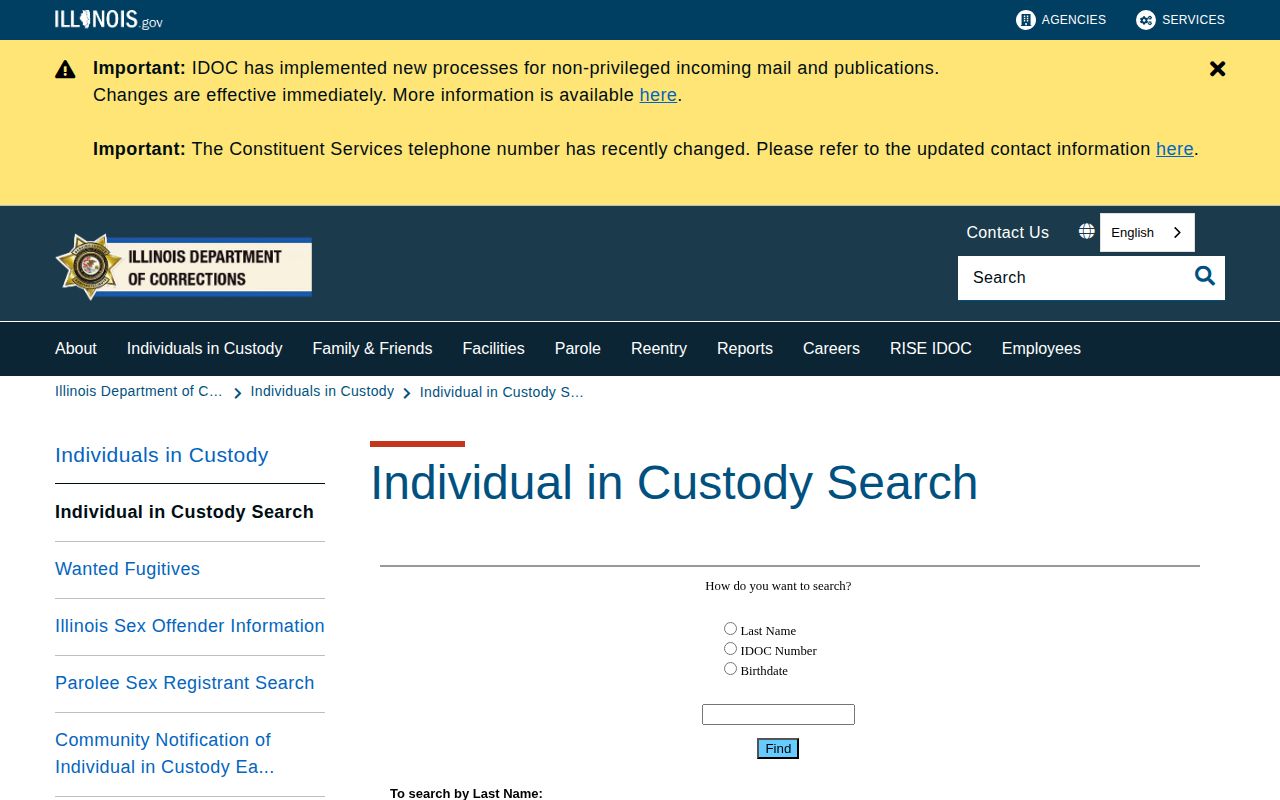
The county and state records may connect through a case, but they have different custodians, retention rules, and photo practices.
Jefferson Bond and Release Timing
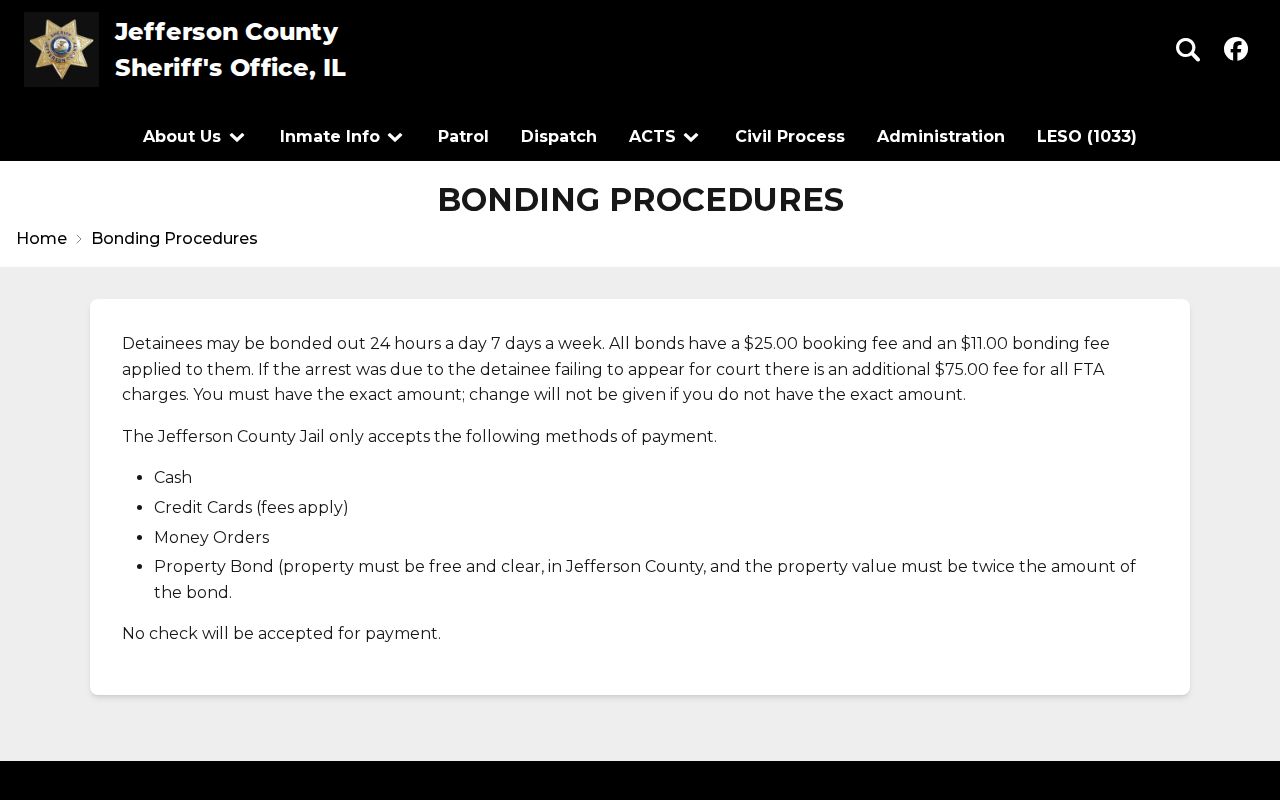
JCSO publishes unusually specific bonding instructions even though it does not publish a normal browser roster. The bonding procedures page says bonds can be handled 24 hours a day, seven days a week. It lists a $25 booking fee and an $11 bonding fee for all bonds, plus a $75 fee for failure-to-appear charges. It also describes accepted payment forms and the exact-amount rule.
These are facility procedures, not a person-specific release notice. A person can bond out before a court docket is easy to find, and a released person can disappear from the app without the underlying booking record being destroyed. Ask JCSO for the custody receipt or release information when that detail matters.
| Published procedure | Jefferson County detail |
|---|---|
| Bond access | Available 24/7 according to JCSO bonding instructions. |
| Booking fee | $25 for all bonds. |
| Bonding fee | $11 for all bonds. |
| Failure-to-appear fee | Additional $75 when the page’s stated condition applies. |
| Payment | Cash, credit card with applicable fees, money order, or qualifying property bond; checks are not accepted. |
Q: Does a vanished app entry mean the charge was dismissed? No. It can mean release or transfer. The court record controls the case outcome, and JCSO controls the custody record.
Court Records After a Jefferson Booking
The Illinois Courts Jefferson County directory lists the courthouse at 100 S. 10th Street in Mount Vernon, phone 618-244-8007, with published hours of 8:00 a.m. to 4:00 p.m. It links to the local Circuit Clerk and the Judici case interface. A CAPTCHA or an unavailable online result is not proof that no case exists. Ask the clerk for the public-access route.
An arraignment or first appearance is a court event, not a jail field. Bond is a release process, not a disposition. Disposition means the later result of the case, such as dismissal, plea, acquittal, conviction, or another order. A booking record may keep the initial charge label even after the court changes the case.
- Booking
- Administrative intake after an arrest or custodial turn-in.
- Arraignment
- A court appearance where the judicial record begins handling the charge.
- Bond
- A release condition or payment process set under the applicable custody and court rules.
- Disposition
- The court’s later resolution of the filed matter.
- Expungement
- A court-ordered process that can destroy, return, or obliterate eligible official records under Illinois law.
Follow the disposition. For the case number and everything that happens later, the court route is the place to look. JCSO handles custody status and public booking details. A full picture often takes both records.
Split the work between the two sources. The court can supply a case number, filings, and later dates. For current custody or public booking facts, go to JCSO. Neither office covers it all. So expect to check both before you have a complete answer.
Juvenile, Withheld, and Historical Files
Illinois law keeps juvenile records confidential, and for good reason. The 2024 inspection noted the Justice Center has no juvenile beds. That is a facility fact, not an invitation to dig up youth booking details. A minor's name, face, or case file should never appear in a public lookup just because some secondary page displays it. The same protection covers victim information, medical notes, fingerprints, DNA, and investigative leads.
Jefferson's current State Archives holdings search shows no jail register, no booking-photo series, and no jail report. So where do you start? The JCSO Records Officer is the first stop for modern records and for any retention-schedule question. The Illinois Local Records Act program can explain approved retention and disposal rules. Keep in mind that a missing archives entry is not proof anything was destroyed.
- Ask JCSO which approved schedule covers booking sheets and booking photographs.
- Ask whether the record was disposed of, transferred, or migrated into another system.
- Use the State Archives or IRAD route as an archive check, not as proof that Jefferson has a digitized jail-photo collection.
- Separate a dated newspaper archive from an official county record.
A historical ICE agreement names the Casey Avenue detention center in 2008 and again in 2010. It is an archival federal-detention document. It does not prove a current contract exists. For present-day immigration custody, use the ICE locator rather than any Jefferson County mugshot index.
Older state, federal, court, and county files each require the records office that created or received them. Do not combine them into one roster.
Jefferson Alerts and Status Changes
The JCSO mobile app, official social posts, Most Wanted notices, and Illinois VINE each do a different job. The app shows current inmate information. A social post covers one selected event. The Most Wanted archive is a curated warrant notice, and VINE sends custody or court-status alerts. None of them is a complete photo feed.
Illinois VINE links participating county jails, IDOC, and circuit-clerk systems. Its job is notification, not browsing booking portraits. Turn to it when a status alert matters, and use JCSO or the court for the record itself.
Alerts get stale fast. Someone can be released, transferred, or have a case changed after a post goes up. Note the agency behind each alert and when it ran. If an official notice is pulled or revised, never pass off an old copy as current.
Federal Custody Is a Different Record
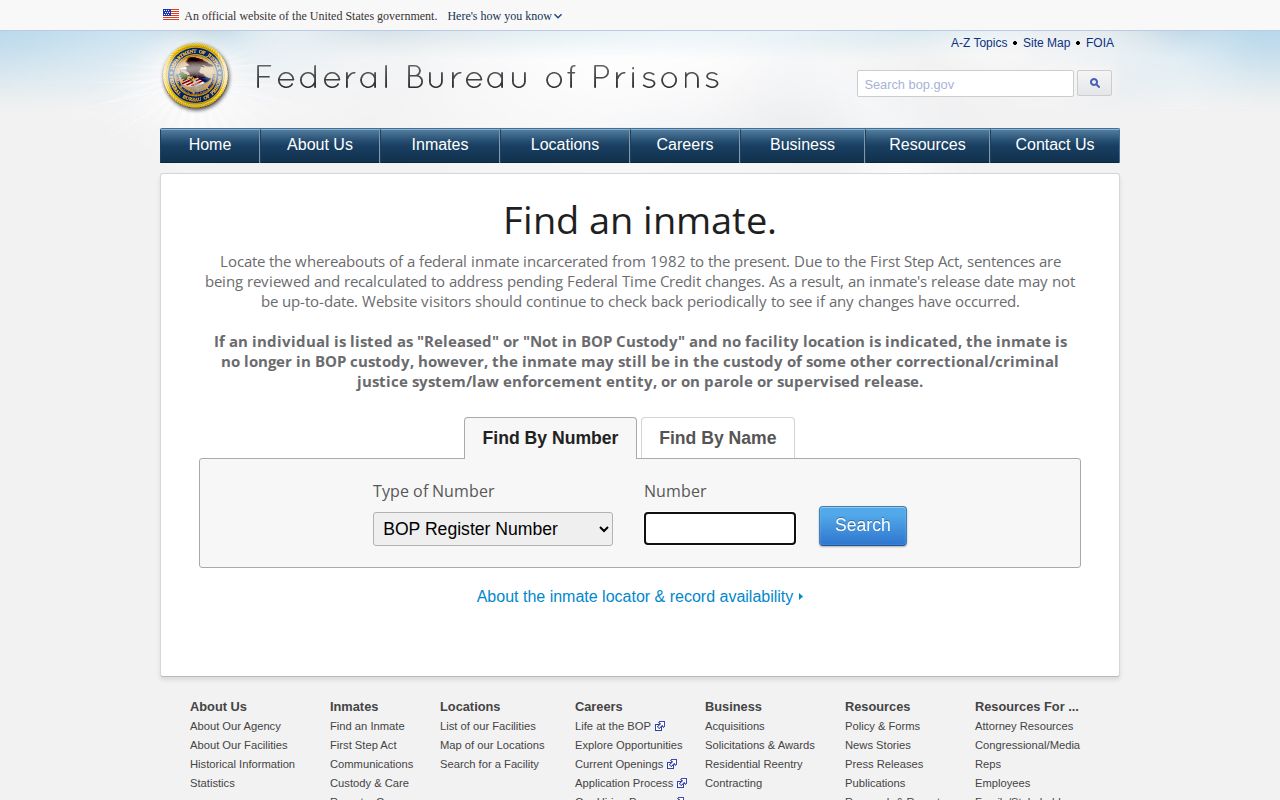
Federal custody runs on a separate paper trail. The BOP locator tracks federal inmates back to 1982. It shows where a person is held and their current status. Booking photos are not published, though. The Marshals Service also holds federal pretrial prisoners, sometimes in local jails. Jefferson County has no public USMS roster to search. For a federal case, go straight to the federal court, the USMS district office, or the BOP itself.
Immigration custody has its own tool. The ICE Online Detainee Locator finds people in ICE custody and some recent CBP holds. You will need the identifiers ICE lists. It has nothing to do with county arrest records. Jefferson County's old ICE agreement is a historical matter and should be described that way. For ordinary county booking questions, JCSO remains the right office.
Custody can pass from hand to hand. A person may start with a local arrest, then move through county booking into federal pretrial custody, a state sentence, or immigration detention. Keep each step of that timeline straight. One system's entry says nothing about the next.
Busted Mugshots by Jefferson County City
City police files and county custody files overlap, but they are not the same thing. Mount Vernon, Ina, and Bluford are the three incorporated cities picked from the 2020 population ranking. When a city arrest leads to county detention, the person usually lands at the Justice Center. A citation, a release, or a transfer can leave nothing in the current app at all. Each city page pairs the local police record route with the county path.
- Mount Vernon Busted Mugshots: MVPD forms and city records, with county booking handled through JCSO when a person enters the Justice Center.
- Ina Busted Mugshots: village FOIA/contact route plus the county app and FOIA path for detention records.
- Bluford Busted Mugshots: no public standalone police roster was located, so the county and court paths carry more of the lookup.
A city name in a news story or an unofficial index can mean several things. It may mark where the arrest happened, where the person lives, or a field some other agency filled in. Check the named arresting agency first. Only then draw any city-level conclusion from it.